
DIVISI 303

Why Road Infrastructure Matters More Than We Think We drive over them every single day. We load trucks onto them, walk our kids alongside them, and judge entire neighborhoods by the condition of them. Yet roads rarely get the attention they deserve until something goes wrong a pothole swallows a tire, a drainage failure floods a parking lot, or an aging surface finally gives out under years of neglect. Road infrastructure is one of those things that quietly holds everything together. And understanding what goes into building and maintaining it properly changes the way you look at the pavement beneath your feet. The Hidden Complexity Beneath the Surface Most people assume a road is just asphalt poured on dirt. In reality, a properly constructed road is a layered engineering system, and every layer has a job. At the bottom is the subgrade the native soil that provides the foundation for everything above it. Get this wrong and nothing else matters. Above that sits the base course, typically compacted gravel or crushed stone that distributes the weight of traffic evenly. Then comes the binder layer, a coarser asphalt mix that adds structural depth. Finally, the surface course the smooth asphalt you actually drive on is the layer most people think of as "the road." Skip or rush any of these steps and you end up with a surface that looks fine on day one and starts deteriorating by year two. This is why proper road construction is not a simple commodity it is a discipline that demands both technical precision and local knowledge. How Local Climate Shapes Road Performance Not every road faces the same enemy. In coastal areas, salt air and moisture are constant adversaries. In desert regions, extreme heat causes asphalt to soften and deform. In northeastern Pennsylvania places like Avoca and the surrounding Lackawanna County area it is the freeze-thaw cycle that does the most damage. Water seeps into tiny cracks in the pavement. Temperatures drop overnight and that water expands as it freezes, widening the crack. It thaws the next day, contracts, and then repeats the process dozens of times through a single winter. Over time, what started as a hairline fracture becomes a pothole wide enough to damage vehicles. This is why roads built by professionals with genuine regional experience outperform those constructed by out-of-area contractors unfamiliar with local conditions. A Road Construction Company Avoca residents and businesses can actually rely on needs to understand how this specific climate interacts with soil, drainage patterns, and asphalt composition not just how roads work in theory. The Lifecycle of a Road Roads do not fail all at once. They follow a predictable lifecycle, and knowing the stages helps property owners and facility managers make smarter decisions about when to act. Stage 1 New Surface (Years 0–5): The road performs as intended. Minor surface oxidation begins but is largely cosmetic. Stage 2 Early Deterioration (Years 5–10): Small cracks appear, especially at edges and joints. This is the optimal window for preventive treatments like sealcoating, which can extend surface life significantly at a fraction of replacement cost. Stage 3 Moderate Damage (Years 10–15): Crack networks widen. Water penetration accelerates base deterioration. Patching becomes more frequent and less effective. Stage 4 Structural Failure (Years 15+): The road has failed structurally. Surface repairs no longer solve the problem. Full milling and reconstruction become necessary. The lesson here is straightforward: roads that receive regular attention in stages one and two rarely reach stage four. Roads that are ignored often require complete reconstruction years ahead of schedule. Commercial vs. Residential Road Needs Residential driveways and commercial road surfaces look similar from the outside, but they face very different demands. A residential driveway carries a handful of vehicles each day, rarely anything heavier than an SUV or small pickup. A commercial access road or industrial lot might absorb hundreds of heavy truck passes daily, alongside employee vehicles, delivery vans, and emergency service access. The structural requirements are categorically different. Commercial pavements typically require a thicker base course, a heavier binder layer, and a surface mix designed to handle sustained loading without rutting. Drainage engineering also becomes more critical at scale a poorly graded commercial lot can direct water toward a building foundation or create standing water that accelerates surface degradation. This is why experienced road construction professionals assess traffic volume, vehicle weight, drainage patterns, and soil conditions before any plan is finalized. Matching the structure to the actual demand is not optional it is the whole point. What "Built to Last" Actually Means The phrase gets used a lot in construction marketing, but it has a real technical meaning in road building. A road built to last is one where: The subgrade has been properly prepared and stabilized before any layers go down The base course is compacted to the correct density, verified with testing rather than guesswork Drainage is engineered into the design so water moves off and away from the surface The asphalt mix is specified correctly for the climate and traffic load Joints and edges are finished properly so water cannot infiltrate at the margins Shortcuts at any of these points will eventually show up not always immediately, but reliably. The difference between a surface that lasts fifteen years and one that needs attention in five almost always traces back to decisions made during initial construction. Roads as Community Infrastructure There is a broader point worth making here. Roads are not just a utility they are the connective tissue of a community. They determine how businesses operate, how emergency services respond, how children get to school, and how neighborhoods feel to the people who live in them. When a road is built well, most people never think about it. When it is built poorly, everyone notices. That invisibility is actually the goal roads that do their job so quietly and consistently that they simply fade into the background of daily life. That standard is worth demanding, whether you are a municipality planning infrastructure investment, a commercial property manager overseeing a facility, or a homeowner thinking about a long-term surface solution. The people laying pavement today are shaping how communities move and function for decades to come.
Why Road Infrastructure Matters More Than We Think

We drive over them every single day. We load trucks onto them, walk our kids alongside them, and judge entire neighborhoods by the condition of them. Yet roads rarely get the attention they deserve until something goes wrong a pothole swallows a tire, a drainage failure floods a parking lot, or an aging surface finally gives out under years of neglect.

Road infrastructure is one of those things that quietly holds everything together. And understanding what goes into building and maintaining it properly changes the way you look at the pavement beneath your feet.

The Hidden Complexity Beneath the Surface

Most people assume a road is just asphalt poured on dirt. In reality, a properly constructed road is a layered engineering system, and every layer has a job.

At the bottom is the subgrade the native soil that provides the foundation for everything above it. Get this wrong and nothing else matters. Above that sits the base course, typically compacted gravel or crushed stone that distributes the weight of traffic evenly. Then comes the binder layer, a coarser asphalt mix that adds structural depth. Finally, the surface course the smooth asphalt you actually drive on is the layer most people think of as “the road.”

Skip or rush any of these steps and you end up with a surface that looks fine on day one and starts deteriorating by year two. This is why proper road construction is not a simple commodity it is a discipline that demands both technical precision and local knowledge.

How Local Climate Shapes Road Performance

Not every road faces the same enemy. In coastal areas, salt air and moisture are constant adversaries. In desert regions, extreme heat causes asphalt to soften and deform. In northeastern Pennsylvania places like Avoca and the surrounding Lackawanna County area it is the freeze-thaw cycle that does the most damage.

Water seeps into tiny cracks in the pavement. Temperatures drop overnight and that water expands as it freezes, widening the crack. It thaws the next day, contracts, and then repeats the process dozens of times through a single winter. Over time, what started as a hairline fracture becomes a pothole wide enough to damage vehicles.

This is why roads built by professionals with genuine regional experience outperform those constructed by out-of-area contractors unfamiliar with local conditions. A Road Construction Company Avoca residents and businesses can actually rely on needs to understand how this specific climate interacts with soil, drainage patterns, and asphalt composition not just how roads work in theory.

The Lifecycle of a Road

Roads do not fail all at once. They follow a predictable lifecycle, and knowing the stages helps property owners and facility managers make smarter decisions about when to act.

Stage 1 New Surface (Years 0–5): The road performs as intended. Minor surface oxidation begins but is largely cosmetic.

Stage 2 Early Deterioration (Years 5–10): Small cracks appear, especially at edges and joints. This is the optimal window for preventive treatments like sealcoating, which can extend surface life significantly at a fraction of replacement cost.

Stage 3 Moderate Damage (Years 10–15): Crack networks widen. Water penetration accelerates base deterioration. Patching becomes more frequent and less effective.

Stage 4 Structural Failure (Years 15+): The road has failed structurally. Surface repairs no longer solve the problem. Full milling and reconstruction become necessary.

The lesson here is straightforward: roads that receive regular attention in stages one and two rarely reach stage four. Roads that are ignored often require complete reconstruction years ahead of schedule.

Commercial vs. Residential Road Needs

Residential driveways and commercial road surfaces look similar from the outside, but they face very different demands.

A residential driveway carries a handful of vehicles each day, rarely anything heavier than an SUV or small pickup. A commercial access road or industrial lot might absorb hundreds of heavy truck passes daily, alongside employee vehicles, delivery vans, and emergency service access. The structural requirements are categorically different.

Commercial pavements typically require a thicker base course, a heavier binder layer, and a surface mix designed to handle sustained loading without rutting. Drainage engineering also becomes more critical at scale a poorly graded commercial lot can direct water toward a building foundation or create standing water that accelerates surface degradation.

This is why experienced road construction professionals assess traffic volume, vehicle weight, drainage patterns, and soil conditions before any plan is finalized. Matching the structure to the actual demand is not optional it is the whole point.

What “Built to Last” Actually Means

The phrase gets used a lot in construction marketing, but it has a real technical meaning in road building. A road built to last is one where:

  • The subgrade has been properly prepared and stabilized before any layers go down
  • The base course is compacted to the correct density, verified with testing rather than guesswork
  • Drainage is engineered into the design so water moves off and away from the surface
  • The asphalt mix is specified correctly for the climate and traffic load
  • Joints and edges are finished properly so water cannot infiltrate at the margins

Shortcuts at any of these points will eventually show up not always immediately, but reliably. The difference between a surface that lasts fifteen years and one that needs attention in five almost always traces back to decisions made during initial construction.

Roads as Community Infrastructure

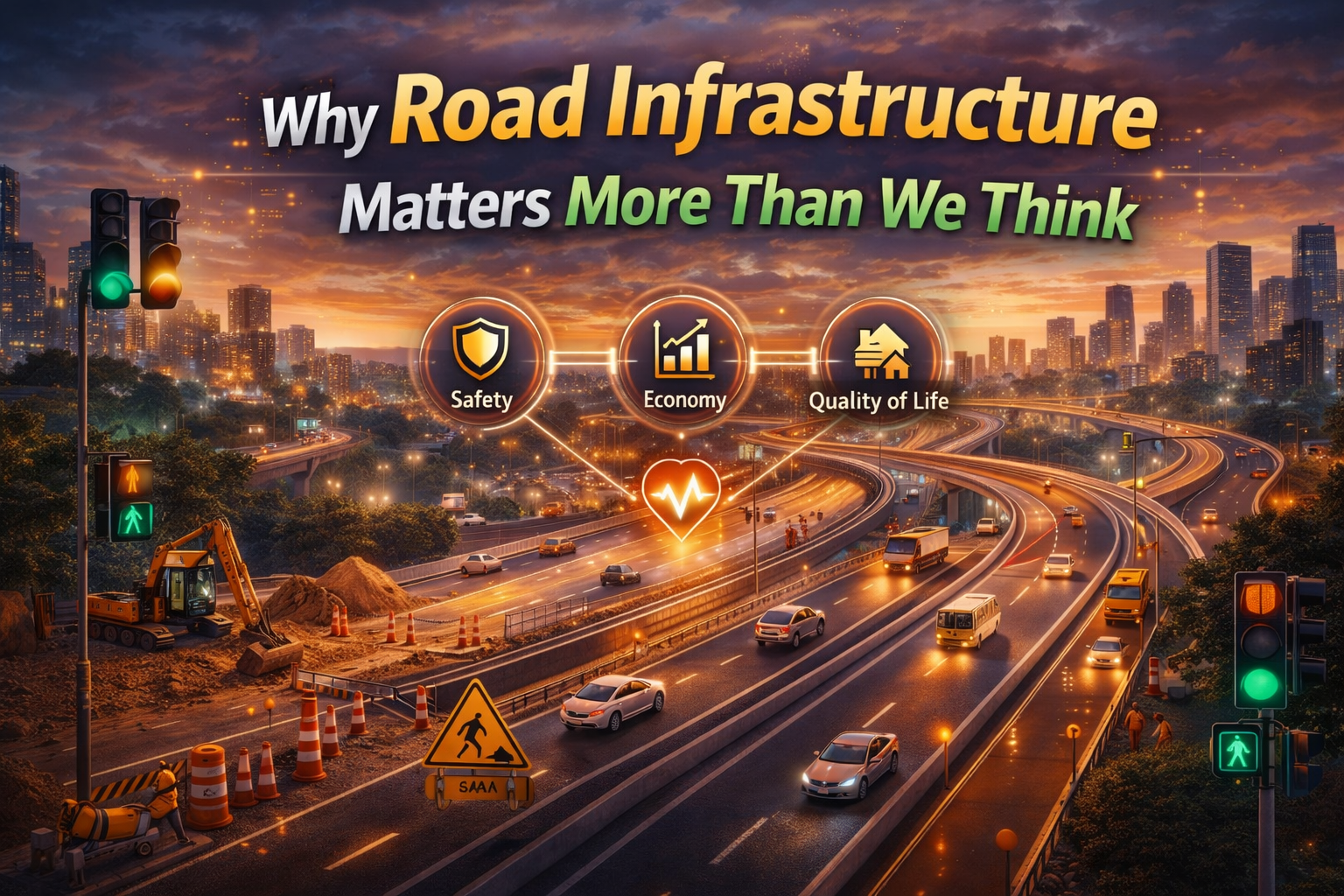
There is a broader point worth making here. Roads are not just a utility they are the connective tissue of a community. They determine how businesses operate, how emergency services respond, how children get to school, and how neighborhoods feel to the people who live in them.

When a road is built well, most people never think about it. When it is built poorly, everyone notices. That invisibility is actually the goal roads that do their job so quietly and consistently that they simply fade into the background of daily life.

That standard is worth demanding, whether you are a municipality planning infrastructure investment, a commercial property manager overseeing a facility, or a homeowner thinking about a long-term surface solution. The people laying pavement today are shaping how communities move and function for decades to come.